Introduction
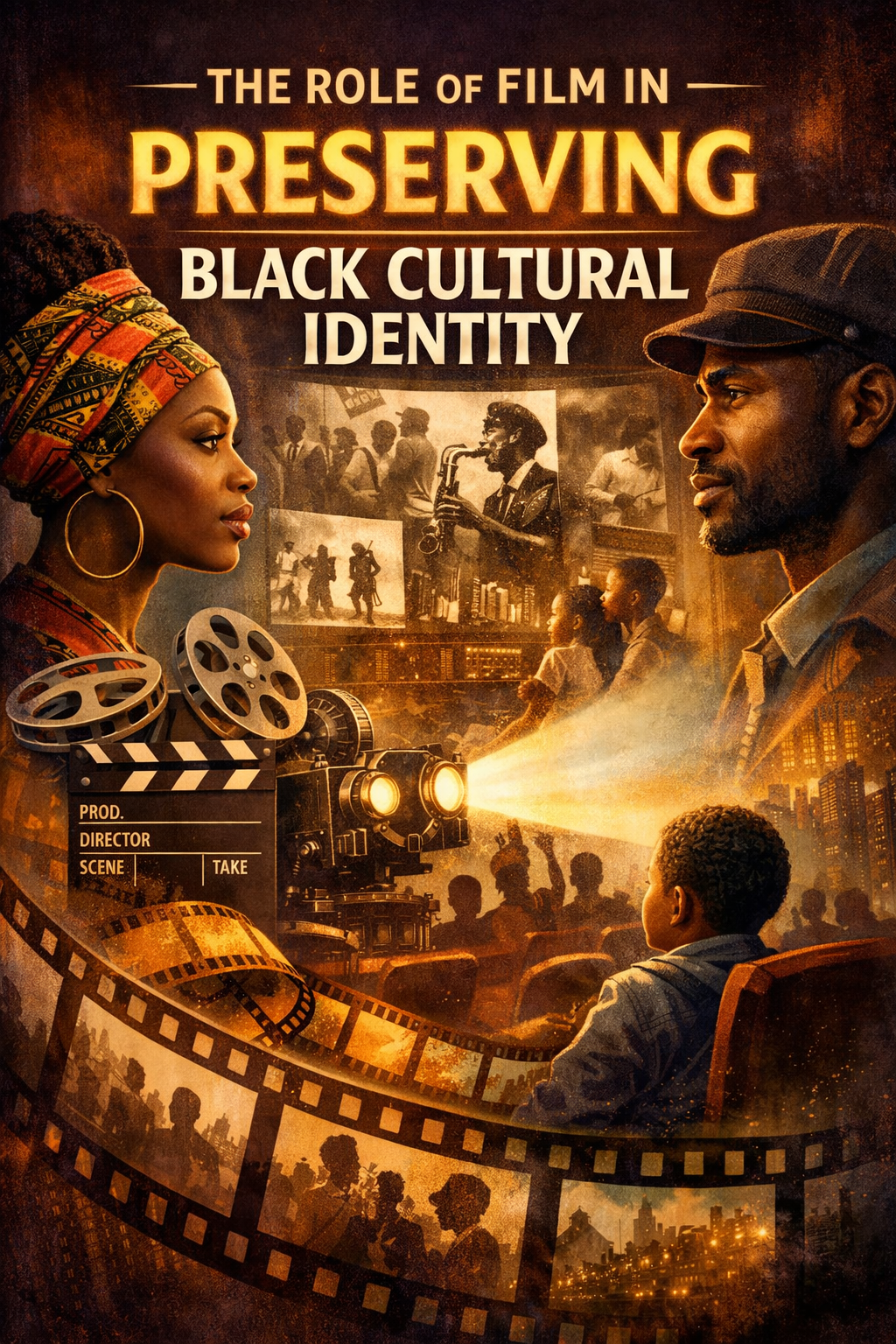
Film has long served as a powerful vessel for memory, identity, and resistance. For Black communities across Africa, the Caribbean, the Americas, and the wider diaspora, cinema has functioned as more than entertainment—it has been a living archive. In societies where written histories were often distorted or erased, film emerged as a visual language capable of capturing lived experience, ancestral knowledge, and cultural continuity. Strong discussion about Role of Film in Preserving Black Cultural Identity.
Film as a Living Cultural Archive
Unlike traditional historical records, film preserves tone, emotion, language, and environment. Black filmmakers have used cinema to document everyday life, rituals, music, spirituality, and social struggle. These visual records allow future generations to witness cultural practices as they were lived, not merely described.
Early independent Black cinema often emerged in response to exclusion from mainstream film industries. Without access to major studios, creators relied on community support, grassroots funding, and alternative distribution. These limitations, however, also allowed for authenticity. Stories were told from within communities rather than filtered through external perspectives.
Storytelling Across the Global Diaspora
Black cultural identity is not monolithic. African cinema reflects local histories shaped by colonialism and post-independence realities. Caribbean films explore migration, memory, and cultural fusion. African American cinema often grapples with race, resistance, and identity within Western societies. Film allows these diverse narratives to coexist while remaining interconnected through shared histories.
Diaspora storytelling also helps bridge generational gaps. Younger audiences, often distanced from ancestral homelands, reconnect through visual narratives that reflect familiar struggles and cultural values.
Film as an Educational Tool
In classrooms and informal learning spaces, film has become an essential educational resource. Documentaries and narrative films offer accessible entry points into complex historical topics. Visual storytelling helps learners contextualize events, humanize historical figures, and understand social dynamics beyond dates and statistics.
Technology and Preservation
Digital platforms have transformed preservation. Films once limited to local screenings now reach global audiences. Streaming and digital archives ensure longevity, allowing cultural stories to survive technological shifts.
Conclusion
Film remains one of the most effective tools for preserving Black cultural identity. As access expands, cinema continues to safeguard history, amplify voices, and sustain cultural memory.
Readers interested in films and books exploring Black culture can find curated resources.