Statement from United Airlines CEO Scott Kirby
PR Newswire
CHICAGO, April 27, 2026
CHICAGO, April 27, 2026 /PRNewswire/ -- Over the last two weeks, there's been a lot of commentary about a potential merger between United Airlines and American Airlines. And to be direct, here's what happened: I approached American about exploring a combination because I thought we could do something incredible for customers together. I always knew that the only way any merger could be successful (and approved) is if it was great for customers and with a willing partner that shared my big, bold vision. I was confident that this combination, which would have been about adding and not subtracting, creating a truly great airline that customers love, could get regulatory approval. I was hoping to pitch that story to American, but they declined to engage and instead responded by publicly closing the door. And without a willing partner, something this big simply can't get done.
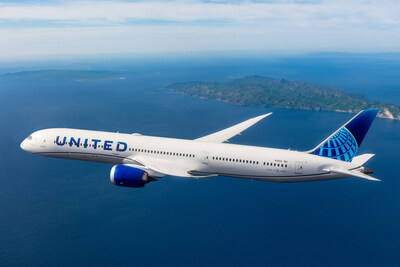
In the past, airline mergers usually have been about two struggling airlines coming together to cut costs, flights and headcount. My aspirations could not be more different. The bold idea I wanted to pursue was about growth that would usher in a brand new era of leadership by U.S. aviation. After all, flight was born here and the storied names of the past, including both United and American, set the standards that the rest of the world aspired to. By combining our airlines and using that scale to revolutionize our customers' experience, we'd create a new, thriving U.S. airline that would be the very best in the world for customers – full stop.
While American's public comments make it clear that a merger like this is off the table for the foreseeable future, I do think it's worth taking the time to describe in some more detail what this could have looked like.
To start, it's clear the strategy United has been implementing over the last several years is winning: building a brand loyal airline by de-commoditizing travel, investing in the customer experience and creating value for every customer no matter where they are sitting.
In the simplest terms, combining United and American could: 1) scale and grow that winning, customer-focused approach, 2) unlock incredible, new opportunities for both airlines' customers, employees and the communities we serve and 3) create a great, new U.S. airline with the scale to compete and lead around the globe.
Here are some of the benefits the combination could produce:
Fly an airline that customers love to even more places: United is already changing what it means to be an airline by having the best service, technology, reliability, and products – for every customer – so that flying on United feels better than other airlines. And, we have big plans to do even more. Bringing those benefits to even more people gives customers of both airlines more choice and more value, including best-in-class products, technology and experiences as well as a more valuable loyalty and rewards program that offers more opportunities to earn and use miles. The combined airline would have been about growth – especially internationally and with expanded service to smaller communities – both of which are mathematically enabled by having a larger network.
Create even more value: Price and affordability are important, but unless you think air travel is just a commodity, 'value' matters too. The truth is that in 2025 ticket prices were 29% cheaper than they were pre-pandemic (adjusted for inflation). And in that time, United has focused on providing ever more value to customers by investing in our product: newer, more modern aircraft with bigger bins, screens in every seat, Bluetooth connectivity, free Starlink Wi-Fi and an award-winning mobile app, just to name a few things. A merger of United and American (and the growth that would have come with it) would have dramatically increased the total number of economy seats in the marketplace, offering cost-conscious customers more affordable ways to fly to more places and greater choices across all price points, while still delivering industry-best value to all customers. We wouldn't propose a combination that would cause prices to rise for customers.
Create a truly globally competitive airline – based in the U.S.: Today, there's a big trade deficit with foreign flagged airlines – they fly about 65% of the long haul seats into our country even though only 40% of the customers are foreign citizens – and the combined scale of United and American would be a better way to compete with foreign carriers. A larger US global airline would deliver U.S. jobs and economic opportunities. This U.S. airline would set the standard for the next century just like U.S. airlines used to in the first century of passenger flight. And this would be a great U.S. airline that is the best, whether you're a customer from Chicago, Des Moines or Dubai.
Boost the U.S. economy, create millions of jobs and revitalize and strengthen the U.S. aircraft manufacturing industry: America is stronger when U.S. carriers flow more of the dollars of U.S. consumers to communities, employees and manufacturing right here at home. A combined company would have created tens of thousands of new high paying, unionized jobs with great benefits which would have led to even more career growth opportunities for the 250,000 employees already at United and American. Plus, the combined airline's need for new aircraft would have supported American manufacturing and domestic supply chains and driven even more job creation. And by flying more seats to more places in the U.S., this merger would boost local tourism and business travel, generating billions of dollars in U.S. economic activity and even more jobs.
I recognized from the beginning that a merger this big in our industry would attract a lot of skepticism in the media, including from some government officials. Since previous mergers have been about saving struggling airlines, previous legal and regulatory reviews have always focused on subtraction and what's being lost. But, a different kind of merger proposal – one that's focused on growth, customer investments and global competitiveness – would have been a different proposition altogether. And, while divestitures in certain domestic markets obviously would have been required, I believe regulators would have approved such a deal because they would have recognized the benefits to customers, our shared employees and communities from coast-to-coast and around the world.
While our pursuit of talks with American have ended, our mission to build the greatest airline in the history of aviation at United is well underway. We have a winning strategy, a culture of innovation and 115,000 of the best aviation professionals in the world working together to deliver for our customers. While the airline industry has always been dynamic and unpredictable (it's one of the reasons that I love this business), United's future is brighter than it's ever been.
Cautionary Statement Regarding Forward-Looking Statements:
This press release contains certain "forward-looking statements," within the meaning of Section 27A of the Securities Act of 1933, as amended, and Section 21E of the Securities Exchange Act of 1934, as amended, relating to, among other things, the strategic and growth plans of United Airlines Holdings, Inc. ("UAL") and its subsidiary, United Airlines, Inc. (together with UAL, the "Company"); the Company's operational, financial, competitive and product positioning; the Company's workforce; possible transactions involving the Company; the Company's objectives, conditions, or requirements for any such possible transaction; the Company's potential counterparties for any such transaction; the potential risks, benefits or outcomes of any such possible transaction for the Company, the Company's customers, employees, community partners, suppliers or any other stakeholders, the airline industry and the economy; and any assumptions underlying any of the foregoing. Such statements involve inherent risks, assumptions and uncertainties, known or unknown, including internal or external factors that could delay, divert or change any of them, that are difficult to predict, may be beyond the Company's control and could cause the Company's future financial results, goals, plans, commitments, strategies and objectives to differ materially from those expressed in, or implied by, the statements. Words such as "should," "could," "would," "will," "may," "expects," "plans," "intends," "anticipates," "indicates," "remains," "believes," "estimates," "projects," "forecast," "guidance," "outlook," "goals," "targets," "pledge," "confident," "optimistic," "dedicated," "positioned," "on track", "path" and other words and terms of similar meaning and expression are intended to identify forward-looking statements, although not all forward-looking statements contain such terms. All statements, other than those that relate solely to historical facts, are forward-looking statements.
Additionally, forward-looking statements include conditional statements and statements that identify uncertainties or trends, discuss the possible future effects of known trends or uncertainties, or that indicate that the future effects of known trends or uncertainties cannot be predicted, guaranteed or assured. All forward-looking statements in this press release are based upon information available to the Company on the date of this press release. The Company undertakes no obligation to publicly update or revise any forward-looking statement, whether as a result of new information, future events, changed circumstances or otherwise, except as required by applicable law or regulation.
The Company's actual results could differ materially from these forward-looking statements due to numerous factors including, without limitation, any risks and uncertainties set forth in Part I, Item 1A. "Risk Factors" and in Part II, Item 7. "Management's Discussion and Analysis of Financial Condition and Results of Operations" of the Company's Annual Report on Form 10-K for the fiscal year ended December 31, 2025, filed on February 12, 2026, and the Company's Quarterly Report on Form 10-Q for the fiscal quarter ended March 31, 2026, filed on April 22, 2026, as well as other risks and uncertainties set forth from time to time in the reports the Company files with the U.S. Securities and Exchange Commission.
 View original content to download multimedia:https://www.prnewswire.com/news-releases/statement-from-united-airlines-ceo-scott-kirby-302754152.html
SOURCE United Airlines
